Why Middle-earth Feels Real — Tolkien's Worldbuilding Method
An analysis of J.R.R. Tolkien's worldbuilding techniques: language-first creation, mythological depth, layered place names, the philosophy of sub-creation, the aesthetics of loss, and lessons for modern worldbuilders.

J.R.R. Tolkien's Middle-earth is a fictional world that carries the weight of something that actually existed. People who read The Lord of the Rings experience a persistent sense that *there is more of this world beyond what is shown* — an almost archaeological certainty that the full expanse is out there somewhere. Why does that feeling arise?
Analyzing Tolkien's worldbuilding methodology reveals lessons that every modern worldbuilder can draw on.
Language Came First
The most unusual aspect of Tolkien's creation process is that his world grew out of his languages, not the other way around. As a professional linguist at Oxford, he constructed Elvish (Quenya and Sindarin) as complete linguistic systems — vocabulary, grammar, phonological rules, and historical evolution — all designed with the same depth as a real natural language. He then reverse-engineered the histories and mythologies that a people speaking those languages would have produced.
This is the origin of Middle-earth's distinctive sense of depth. Language is the crystallization of culture. When the language is genuinely structured, the culture that speaks it feels genuine too. An Elvish poem carries within it the history and aesthetic sensibility of the civilization that created it. The harsh phonology of Dwarvish Khuzdul reflects the sensibility of a people at home with stone and metal.
This tells us something about why many fictional worlds feel thin: when invented names look exotic but come from no coherent linguistic system, the world beneath them has no roots.
Mythological Depth: When the Creation Myth Supports the World
Middle-earth has a creation story in *The Silmarillion* — how the world came into being, how the gods (the Valar) shaped it, how Elves and Men came to exist. This mythological background existed before Tolkien wrote the main narrative of The Lord of the Rings.
This "mythological depth" is what gives the work its distinctive authority. The Silmarillion's details are largely absent from the main text, yet they surface constantly in the speech and behavior of the characters. When the Elves speak of ancient events, their words carry thousands of years of lived history — because the author actually thought through those thousands of years.
Modern worldbuilders can apply this directly: building history that never appears in the narrative still makes the narrative denser. Readers and players sense the unspoken depth beneath the surface. The 10% that appears on the page feels real because 90% of the iceberg exists below it.
Aetheria's Great Fall functions as exactly this kind of mythological event. A world-altering historical catastrophe existing as the foundation of current geography, politics, and culture — this creates mythological depth in the world.
The Layering of Place Names: History Written Into Geography
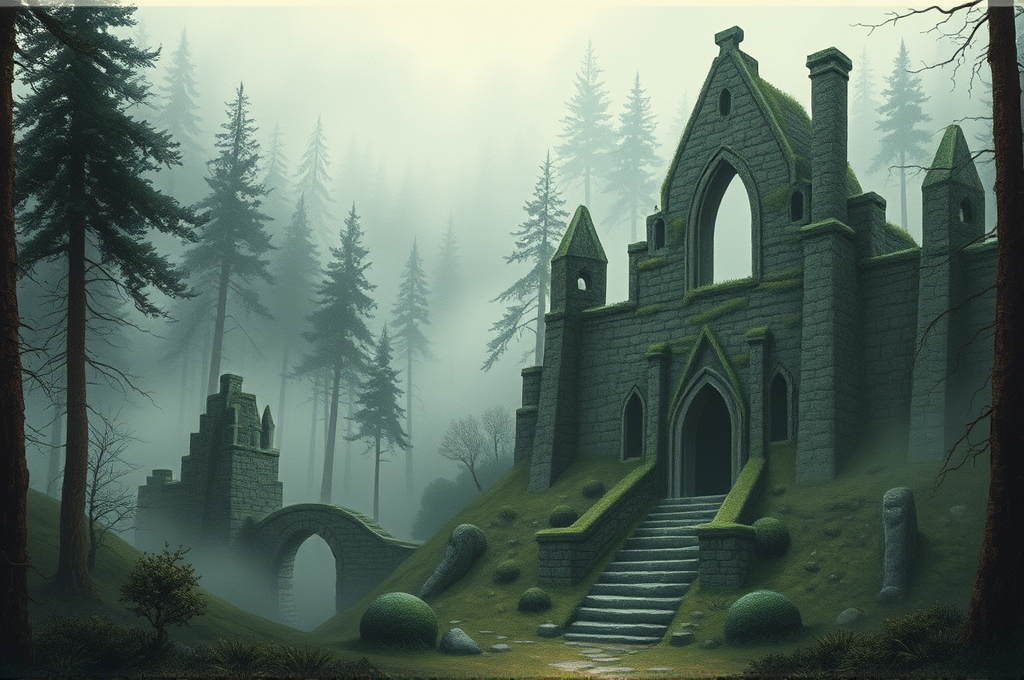
Middle-earth's place names carry multiple layers of historical naming from multiple languages. A single location holds one name in Elvish and another in the common tongue of Men, and which name is used reflects a speaker's cultural identity and the region's political history.
This is exactly how the real world works. Jerusalem / Yerushalayim / Al-Quds — the same place carries different names in different linguistic and cultural traditions, and the difference itself encodes centuries of competing claims and belonging. Place names are not decoration; they are compressed history.
Creating layered place names in your own setting is an effective technique when designing a map. "The old Elvish name still exists, but the human settlers transformed it into their own language" — this single detail implies an entire history of conquest and cultural transition.
The Philosophy of Sub-creation: Participation, Not Rebellion
Tolkien held a distinctive personal philosophy about the act of creation. He called it "Sub-creation": just as God created the world, humans can create smaller worlds — and this is not rebellion against God, but the legitimate exercise of the creative faculty God granted us.
This philosophy is embedded throughout Middle-earth. The world contains a contrast between *good creation* and *evil mimicry*. Elvish craftsmanship participates in the beauty of the world; Sauron's ring-forging is the usurpation of the creative force and its perversion into a tool of domination. A philosophy of artistic creation is woven into the narrative's central conflict.
This alignment of worldview with story theme gives the work genuine philosophical depth. How is the world made, who protects it, and who tries to destroy it? These questions are structurally identical to the questions a worldbuilder asks in designing their setting.
Loss and Longing: The Beauty of an Imperfect World
Middle-earth is a history of decline from a golden age. Greater things existed once — Númenor sank beneath the sea, the Elvish kingdoms fell, the kingdoms of Men fractured. The events of The Lord of the Rings take place at the far end of that long deterioration.
This "aesthetic of loss" gives Middle-earth its particular lyricism. The Elves are immortal, and so they remember the glory that was. Their beauty is tinged with sorrow. The ruins of ancient kingdoms stand, but their glory is not recoverable.
A world that was once great and has since fallen holds more emotional pull than a perfect, trouble-free paradise. Loss is a powerful device for generating empathy. Readers and players mourn alongside the characters when they understand what was once there.
Lessons for the Modern Worldbuilder
Applying Tolkien's methods to modern worldbuilding requires a realistic perspective. He spent decades constructing Middle-earth. Demanding the same thoroughness of yourself may not be achievable or necessary.
But the essential lesson can be distilled: depth comes from what is not spoken. Making every element in your story feel like the tip of an iceberg — as though an unspoken history, language, and mythology sits beneath it — is what creates the sensation of a living world.
The naming of the Canopy Islands, the mythological origins of the Root Land — these "unspoken backgrounds" are what give the Aetheria world its three-dimensionality.
Worldseed lets you embed this kind of "unspoken history and mythology" into your world through AI dialogue.
What Tolkien Ignored: Productive Ambiguity Over Perfect Consistency
Many analyses of Tolkien cite "perfect internal consistency" as his defining quality. This is only partially true. Middle-earth contains numerous contradictions and unresolved mysteries.
There are small discrepancies between *The Silmarillion* and *The Lord of the Rings*. Tolkien revised his own canon throughout his life. He died with imperfect consistency, and his son Christopher spent years organizing the unpublished manuscripts.
This "incomplete consistency" is paradoxically part of Middle-earth's appeal. Interpretive mysteries invite the reader's imagination in. "Where did the Ent-wives go?" "Do Balrogs have wings?" — these debates have run for decades precisely because the text is open.
A world that is appropriately open invites reader participation in a way that a perfectly closed world cannot. This is a lesson that applies to modern worldbuilding as well.
The Ethics of a Secondary World: For Whom Do You Build?
Returning to Tolkien's sub-creation theory, an important ethical question surfaces: *for whom are you making this world?*
Tolkien made Middle-earth clearly for himself. The Elvish languages were not created on commission — they grew from personal delight in linguistic invention. The world was built not "for the story" but because *the world itself had a reason to exist*.
This pure joy in creation may be the deepest source of Middle-earth's authenticity. When an author loves a world, that love transmits itself to readers. When a world is designed primarily for commercial ends, readers often sense the thinness.
Commercial constraints are real, and it's possible to build a world sincerely within them. But asking "can I love this world myself?" as your starting point may be the most fundamental lesson Tolkien has to offer.
Carry it into your world
Turn one idea from this article into a living part of your world
Name the world, choose a genre, and use AI to connect your first element to the rest of the setting.
This week's seed: “Magic works only when spoken aloud in front of a witness. Who becomes valuable in this world — and who is silenced?”
Free includes 20 AI messages per 24 hours. No card required.
Keep shaping the idea
Three guides connected by topic, craft, or worldbuilding method.
Game of Thrones Political Geography — How Terrain Drives Story
An analysis of how Westeros's geography generates political structure and narrative conflict: the Wall, rivers as borders, castle cities, asymmetric climates, logistics of war, resource geography, buffer zones, and the costs of empire.
Read guide →Three Stories Behind a Settlement Name
A practical worldbuilding exercise for giving one settlement three useful names: the terrain name, the ruler's official name, and the short name residents actually say. Includes a blank worksheet.
Read guide →A Faction That Outlives Its Founder
A practical worldbuilding exercise for making an organization continue after its founder is gone: define the work, shared resource, succession choice, and internal conflict. Includes a blank organization card.
Read guide →