5 Principles for Designing a Magic System Without Plot Holes
Five principles for building a coherent magic system: establishing costs and constraints, connecting to physical laws, considering social impact, using symmetry and contrast, and leaving room for discovery.

Introduction
Designing a magic system is one of the most enjoyable and most difficult parts of building a fantasy world. Make it too powerful and narrative tension evaporates; leave it without constraints and you have a world where anything goes. A magic system that is too strong lets protagonists solve every problem with a spell — all urgency is gone. One that is too weak raises the question of why the system exists at all.
Countless writers, from Brandon Sanderson's "Laws of Magic" onward, have proposed principles for magic system design. Here I have synthesized those approaches into five practical principles applicable not only to fantasy magic but to SF superscience, mysterious powers in any genre — any "extraordinary ability" you need to design.
Principle 1: Define Costs and Constraints First
Before deciding what magic *can* do, decide what it *cannot* do and what *price* it requires. Magic with clearly defined costs introduces strategic decisions into your narrative, allowing readers to think "that was the smart use of magic in this situation."
Costs fall into three broad categories: consumption costs (depleting mana or stamina), risk costs (danger upon failure), and opportunity costs (what must be sacrificed to use magic at all). The richest costs for storytelling are opportunity costs. "If I use this power here, I won't be able to use it in a more important moment later" — this choice simultaneously reveals character values and strategy.
Aetheria's Ether Refining is divided into seven stages; the higher the refinement stage, the greater the risk of failure (stone rampage). This cost design naturally generates the dilemma "should I risk seventh-stage refining or not?" Furthermore, the setting that refiners, through repeated refinement, develop a deepening "resonance with the stone" until they begin to take on the properties of Ether Stone themselves, is an expression of opportunity cost — magic use transforms the user over time.
A checklist for designing costs: What price does the most powerful magic user pay? What happens if magic is overused? In what situations is *not* using magic the wiser choice? If you can answer all three, your cost design is sufficient.
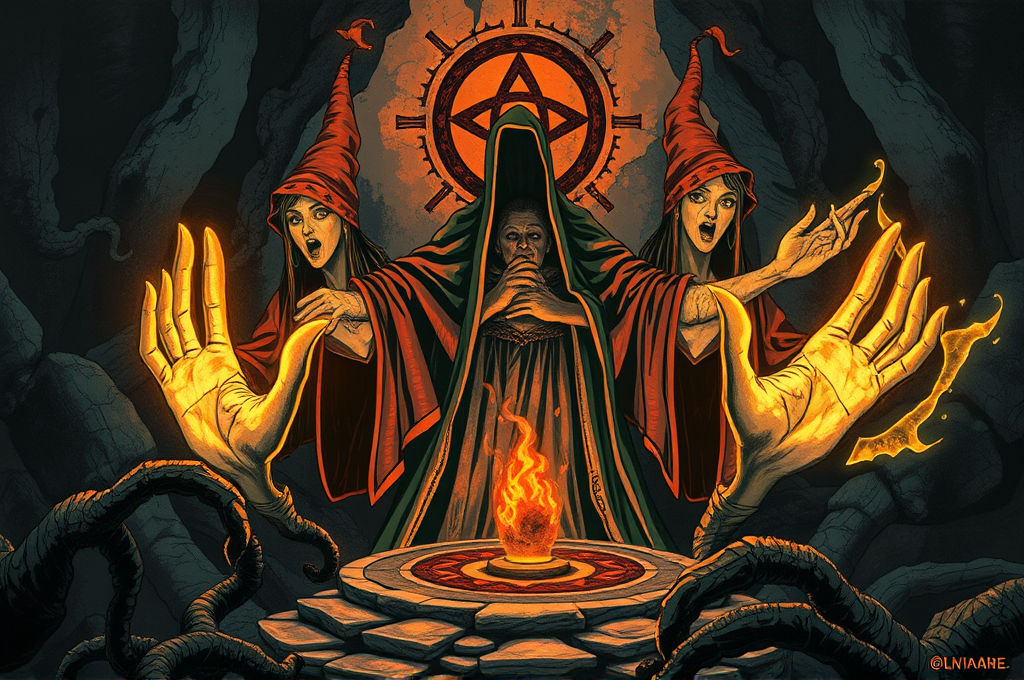
Principle 2: Connect to the World's Physical Laws
Magic should function as an *extension* of the world's physical laws, not as a completely independent supernatural phenomenon. If it is treated as entirely separate from physics, readers experience the discomfort of "why do the laws of physics get ignored only here?"
Two approaches exist. One is treating magic as simply *one of the world's physical laws*. The other is establishing a *reason for why exceptions to physics occur*. The former corresponds to hard magic systems (*Fullmetal Alchemist*, *The Stormlight Archive*); the latter to soft magic systems (Middle-earth). Whichever you choose, the world needs an internal consistency — the sense that "this is inside the rules of this world."
In Aetheria, the buoyancy of Ether Stone is established as "a physical property of the crystal that repels gravity." It is not magic — it is a physical law of this world. This gives the supernatural phenomenon of floating a "scientific texture." Crucially, it is consistent: the stone only generates as much lift as its weight, so it reaches equilibrium at a particular altitude. This design provides the justification for why a floating civilization — the Canopy Islands — is physically possible.
The most important aspect of connecting to physical laws is energy conservation. From where does magic obtain energy, and where does that energy go? Designing this answer gives your magic system the credibility of "a variant of real physical phenomena."
Principle 3: Consider the Social Impact
A society in which magic exists should be fundamentally different from one in which it does not. If communication magic exists, what happens to the postal system? If healing magic exists, what happens to medicine? If battle magic exists, what happens to military strategy? Thinking through these "second-order effects" adds thickness to your world.
The most important fork in the road when considering social impact is "whether magic is democratized or monopolized." If anyone can use magic, existing power structures change at their roots. If only certain people can, that becomes a form of privilege — and a source of inequality. Answering this question naturally determines the world's political, economic, and cultural structure.
In Aetheria's Root Land, the mycelial network's (Earth Memory's) emotional sharing influences even the political system, generating a form of governance close to direct democracy — "mycelium voting." This is the result of an ability to share emotions making centralized power structurally difficult to maintain. Meanwhile, in the Canopy Islands, the refiners' guild's monopoly on Ether Refining technology produces an oligarchic power structure. Placing two different "magic and politics" relationships within the same world generates contrast and complexity.
Principle 4: Use Symmetry and Contrast
Placing a contrasting second magic system alongside the first creates depth in the world. Designing contrast as "both have reasons" rather than "one is right" increases the narrative's complexity.
When designing contrast, choosing deep-level oppositions (individual excellence vs. collective intelligence) over superficial ones (light vs. dark) increases the story's philosophical depth. When it is later revealed that two opposing systems are actually "different answers to the same problem," the story gains a powerful turning point.
In Aetheria, the Canopy Islands' Ether Stone (lift, ascent) and the Root Land's Earth Memory (gravity, rootedness) form a symmetry. They appear to oppose each other, but they share a history — a thousand years ago, the two cooperated to overcome the catastrophic Great Fall. The structure of symmetry with a point of contact means the opposition carries both tragedy and the possibility of reconciliation simultaneously.
Principle 5: Leave Room for Growth
Rather than revealing the magic system's full scope from the beginning, design it so that new aspects are "discovered" as the story progresses. Crucially, make these feel like "things that existed from the start but hadn't been noticed" rather than retroactive additions.
A technique for building in room for growth is "placing incomplete knowledge." The world's inhabitants don't fully understand their own magic system — this setting allows a protagonist's "discovery" to function as "solving an existing mystery" rather than "adding a new rule." Readers experience the satisfaction of "so *that's* what it was."
Aetheria's Ether Stone has a variant called "Reversed Stone" existing in the Root Land's depths. This isn't mentioned in the story's early sections, but can be designed as an element that plays an important role as a solution to the Great Fall — a "setup" that can be planted. If the Reversed Stone functions as "an existing mystery," it's possible to place fragmentary references in the Canopy Islands' ancient records as foreshadowing in the early story.
The Interaction of the Five Principles
The five principles function independently, but combining them generates synergies. Costs determine social structure (Principles 1 and 3); physical law connection gives contrast its credibility (Principles 2 and 4); room for growth enables the rediscovery of costs (Principles 5 and 1). These chains are what make a world "feel alive."
As for the sequence of design, I recommend starting with Principle 1 (cost setting). Once costs are determined, how they affect physical laws (Principle 2) and society (Principle 3) naturally becomes visible. Contrast (Principle 4) is best positioned once the overall picture is clear, and room for growth (Principle 5) is most effectively added last, in the form of "mysteries no one knows yet."
Looking at Aetheria's magic design, you can see all five principles integrated into a single world. Explore the world of Aetheria to use it as a practical reference.
Summary: Growing a Magic System with Worldseed
Magic system design is the most creative and most logical work in world-building. By keeping in mind these five principles — cost, connection to physical laws, social impact, symmetry, and room for growth — you can create a magic system that avoids "convenient plot device" status and genuinely invites readers to explore it.
In Worldseed, you can build magic systems like these through AI dialogue and use the contradiction-detection function to automatically check consistency. The AI supports design work — "determining costs," "thinking about social impact" — by asking questions throughout the process. Shall we grow your world's magic system together?
Carry it into your world
Turn one idea from this article into a living part of your world
Name the world, choose a genre, and use AI to connect your first element to the rest of the setting.
This week's seed: “Magic works only when spoken aloud in front of a witness. Who becomes valuable in this world — and who is silenced?”
Free includes 20 AI messages per 24 hours. No card required.
Keep shaping the idea
Three guides connected by topic, craft, or worldbuilding method.
Three Stories Behind a Settlement Name
A practical worldbuilding exercise for giving one settlement three useful names: the terrain name, the ruler's official name, and the short name residents actually say. Includes a blank worksheet.
Read guide →A Faction That Outlives Its Founder
A practical worldbuilding exercise for making an organization continue after its founder is gone: define the work, shared resource, succession choice, and internal conflict. Includes a blank organization card.
Read guide →Species Design Fundamentals — How to Create Believable Fantasy Races
A guide to designing original fantasy species with internal logic: starting from ecology, building culture from survival strategy, language shaping thought, lifespan differences, sensory variation, and social structure.
Read guide →