Species Design Fundamentals — How to Create Believable Fantasy Races
A guide to designing original fantasy species with internal logic: starting from ecology, building culture from survival strategy, language shaping thought, lifespan differences, sensory variation, and social structure.
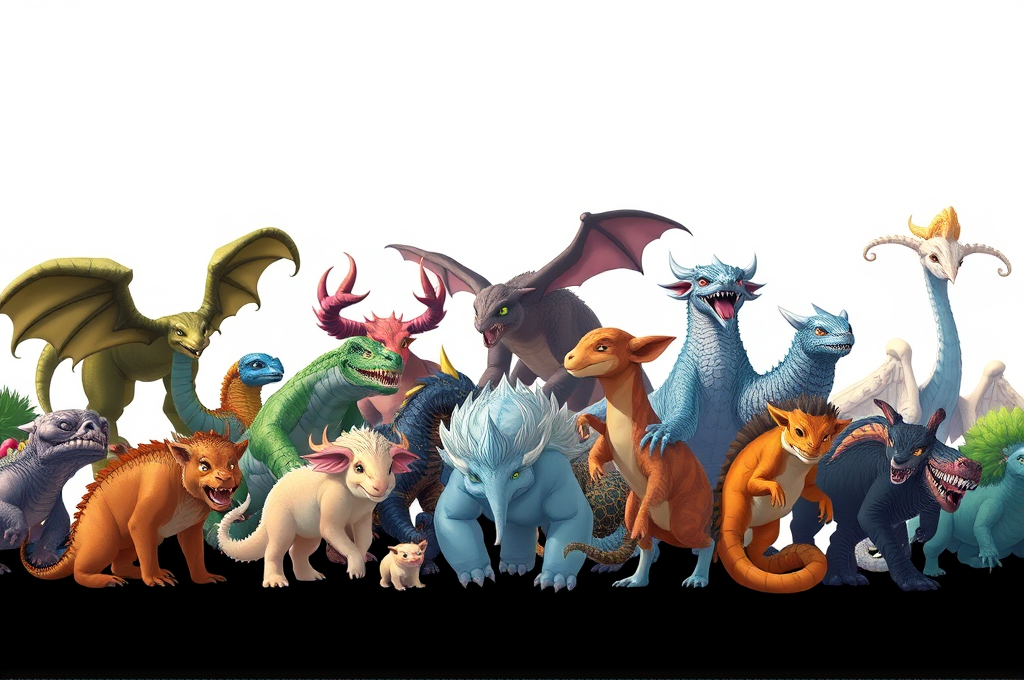
"Elves live in forests and use bows; dwarves live in mountains and swing axes." Fantasy species design is saturated with stereotypes like these — and that's not entirely a bad thing. Shared genre grammar allows readers to orient themselves immediately. But if you're trying to build a world with genuine originality, the necessary starting point is questioning the *why* beneath those stereotypes.
Start from Ecology: Environment Creates Species
Living things evolve in response to their environment. This principle holds for fictional species design just as firmly as for real biology. What environment did your species emerge from? From that environment, their physical characteristics, behavioral patterns, and social structures can all be derived.
Consider a highland-dwelling species. To handle thin air, they may have greater lung capacity and higher red blood cell counts. To survive cold temperatures, they may have dense body hair and thick subcutaneous fat. To move across rocky terrain, their limbs may be short and powerfully muscular. These physical traits cascade into diet, hunting methods, dwelling construction, and ultimately social organization.
The reverse approach works equally well. If you have "a slender, long-eared species," ask: what environment makes that body shape advantageous? An environment requiring keen hearing to detect threats (a forest dense with predators)? A hot climate where those large ears serve as thermal radiators? The answer to "why does this species look this way" generates the world setting's depth.
Aetheria's Shimobe is an example of a species designed with ecological adaptation in mind. Examining how their physiology and culture connect reveals how powerfully a deterministic approach to species design can generate plausibility.
Culture Is the Crystallization of Survival Strategy
Culture is the accumulated customs, values, and institutions a group has developed to survive. When you can answer "why does this species have this culture?" the species design gains internal logic.
Collectivism vs. Individualism: Species that evolved in harsh environments where isolated individuals could not survive (Arctic tundra, water-scarce desert) tend toward strong group orientation. Species from resource-rich environments where individuals could survive independently are more likely to develop cultures that prize personal autonomy.
Rituals and taboos: Events that once threatened group survival (plague, famine, invasion) are often culturally encoded as "things you must not do." When designing a species' taboos, asking "why did this become a prohibition?" and building a historical answer makes the world three-dimensional.
Aesthetics and craft: What a species finds "beautiful" is related to the abilities and values it has historically most needed. Warrior species may treat the refinement of fighting technique as the highest aesthetic. Artisan species may center beauty on the completeness of craftsmanship. A species that uses music as a primary communication medium may place tonal complexity and harmonic richness at the center of its aesthetic.
Language Shapes Thought
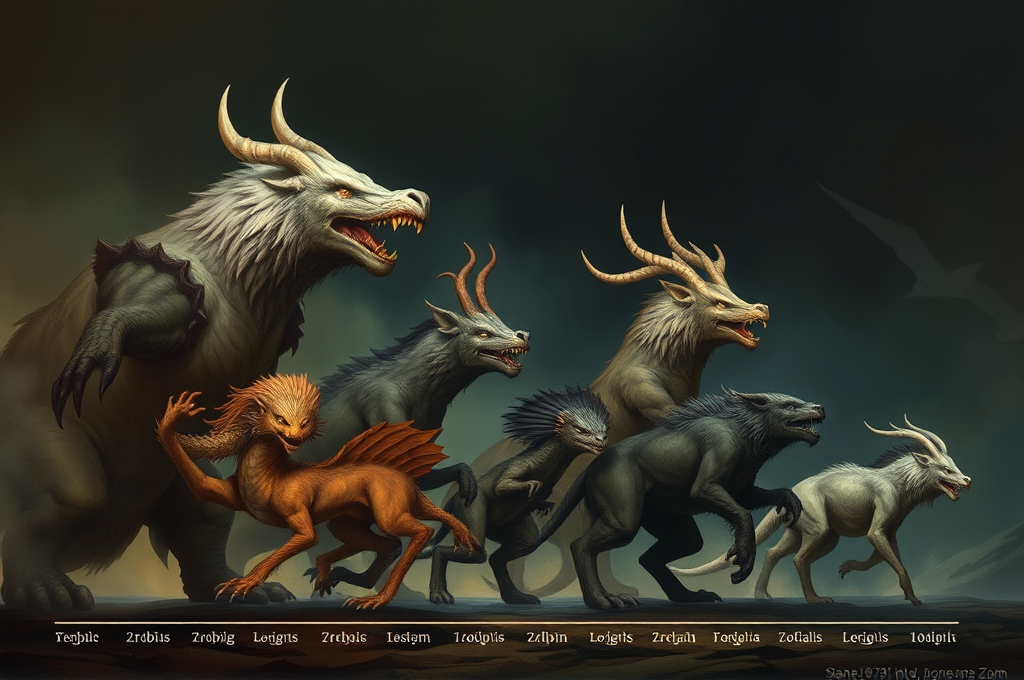
The Sapir-Whorf hypothesis — that language shapes thought — is academically contested, but as a creative tool for species design it's extremely useful.
Thinking about what distinctive features your species' language has reveals the distinctive features of their cognition.
Tense structure: Human languages generally divide time into past, present, and future, but this is not universal. A long-lived species (lifespan of several centuries) might have a five-way tense structure: distant past, recent past, present, near future, far future — because for them, "a hundred years ago" feels closer to "yesterday."
Conceptual granularity: When a species' language has many finely differentiated words for a concept, that species places special importance on that concept. An aquatic species might have dozens of words for water states — temperature, salinity, current speed, clarity — because those distinctions are matters of life and death.
Omission and emphasis: A species whose language lacks well-developed pronouns (always using names rather than "he/she/they") may reflect a culture that strongly values individual identity. A culture where role titles replace personal names reflects a social structure that values role within a group over the individual self.
Designing a World Where Multiple Species Coexist
Building out a single species in depth still doesn't produce a realistic world if you haven't defined the relationships between species. In multi-species worlds, the history of inter-species relationships shapes everything in the present.
Questions to ask:
- Has contact between species been ongoing for centuries, or is it recent?
- Were there wars or major conflicts in the past? Does that memory still smolder?
- How does society treat inter-species marriage and mixed heritage?
- Has one species historically occupied a subordinate position relative to another?
The answers to these questions become the source of your characters' prejudices, sympathies, complexes, and pride.
The relationship between the Canopy Islands and the Root Land demonstrates the complexity of a world where different civilizations coexist. Geographically separated yet bound by recurring cycles of trade and conflict — this kind of relationship is what generates a world's dynamism.
Using Worldseed to Develop Species Design
Species design tends to become a solitary exercise. Chasing the chain of "ecology → culture → language → inter-species relations" alone is prone to blind spots and dead ends.
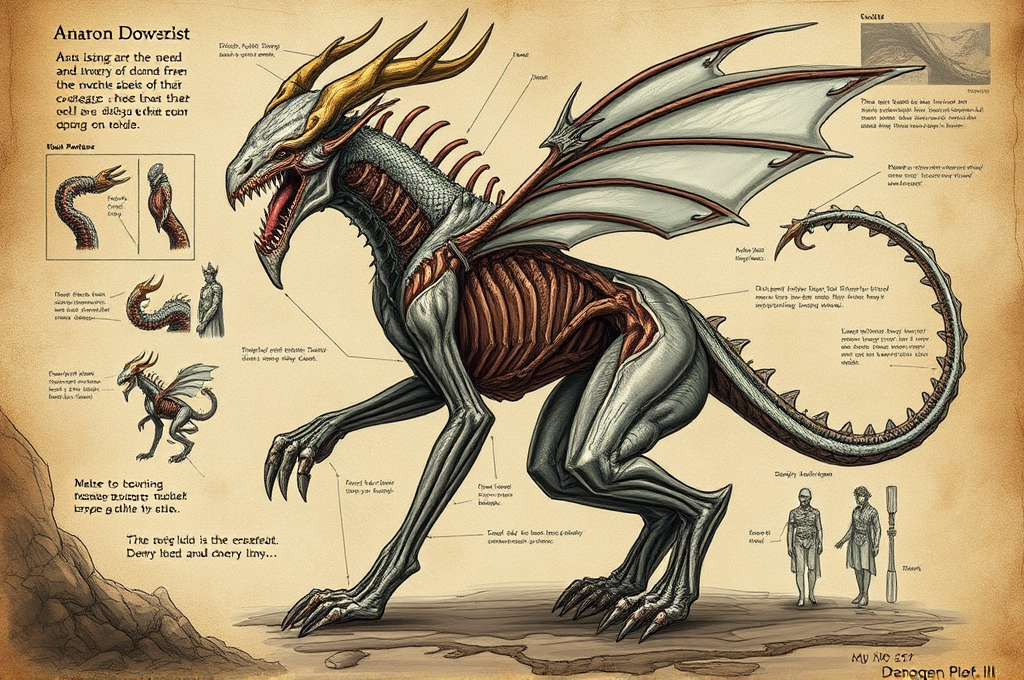
Worldseed lets you develop species design through AI dialogue. Starting from "I want to design an intelligent aquatic species," you can deepen physical characteristics, social structure, linguistic traits, and historical relationships with other species through successive rounds of conversation. The AI flags contradictions, presents possibilities, and acts as a collaborator that expands your ideas.
When Lifespan Differs, Culture Diverges
Of all the factors that influence design in a multi-species world, lifespan differences may be the most significant. When Elves live for centuries and Humans live for decades, a fundamental perceptual divide opens between them.
Long-lived species tend to resist change. For them, "tradition" is living memory, not historical record — and the resistance to altering it is correspondingly strong. A society where individuals with direct knowledge of events five hundred years ago are still present experiences history as testimony, not hearsay.
Short-lived species are relatively receptive to change. Values can shift within a few generations, and the lifespans of those who resist innovation are short — which makes it easier for change to establish itself.
This lifespan gap introduces complexity into inter-species relationships. Long-lived species may view short-lived ones as children. Short-lived species may regard long-lived ones as fossils. Both perspectives have genuine validity — and that ambiguity is productive for character and story.
Sense Organ Variation Changes a Species' Entire World
Differences in sensory apparatus fundamentally change how a species perceives reality.
Visually-oriented species prioritize visual symbols and maps. Species with acute hearing focus on subtle tonal nuances in communication and have an instinctive aversion to noise. Species with highly developed olfaction read others' emotional states through scent — creating societies where concealing emotions is simply difficult.
If a species can see ultraviolet light, plant flowers present entirely different patterns; their concept of beauty diverges sharply from humans'. A species that navigates space through echolocation places far more importance on a building's acoustic design than any human architect would.
Carefully designing these sensory differences naturally generates that species' art, architecture, communications technology, and standards of hygiene.
Social Structure: Who Makes Decisions and Why
Family units, clan organizations, state institutions — social structures can be derived logically from a species' ecological characteristics.
Predators whose baseline mode is solitary action, once they develop intelligence, will likely build cultures that view cooperation with others as "something done under duress." That leads to a culture that prizes independence and resists submission to authority. By contrast, species that evolved from pack hunters will develop cultures that are naturally at ease with collective decision-making and hierarchical command.
The design of who *holds* decision-making power is equally important. Elder rule (experience and age), meritocracy (ability and achievement), hereditary rule (birth), democratic rule (collective agreement) — the combination of these principles, and which domain each governs, creates that society's political culture.
Design your original species through dialogue with Worldseed →
Carry it into your world
Turn one idea from this article into a living part of your world
Name the world, choose a genre, and use AI to connect your first element to the rest of the setting.
This week's seed: “Magic works only when spoken aloud in front of a witness. Who becomes valuable in this world — and who is silenced?”
Free includes 20 AI messages per 24 hours. No card required.
Keep shaping the idea
Three guides connected by topic, craft, or worldbuilding method.
Three Stories Behind a Settlement Name
A practical worldbuilding exercise for giving one settlement three useful names: the terrain name, the ruler's official name, and the short name residents actually say. Includes a blank worksheet.
Read guide →A Faction That Outlives Its Founder
A practical worldbuilding exercise for making an organization continue after its founder is gone: define the work, shared resource, succession choice, and internal conflict. Includes a blank organization card.
Read guide →5 Principles for Designing a Magic System Without Plot Holes
Five principles for building a coherent magic system: establishing costs and constraints, connecting to physical laws, considering social impact, using symmetry and contrast, and leaving room for discovery.
Read guide →