How to Build an Alternate History World — Worldbuilding from 'What If'
A methodology for designing alternate history fiction: choosing points of divergence, tracing butterfly effects, the philosophical question of historical determinism, maintaining consistency, and leveraging reader knowledge.
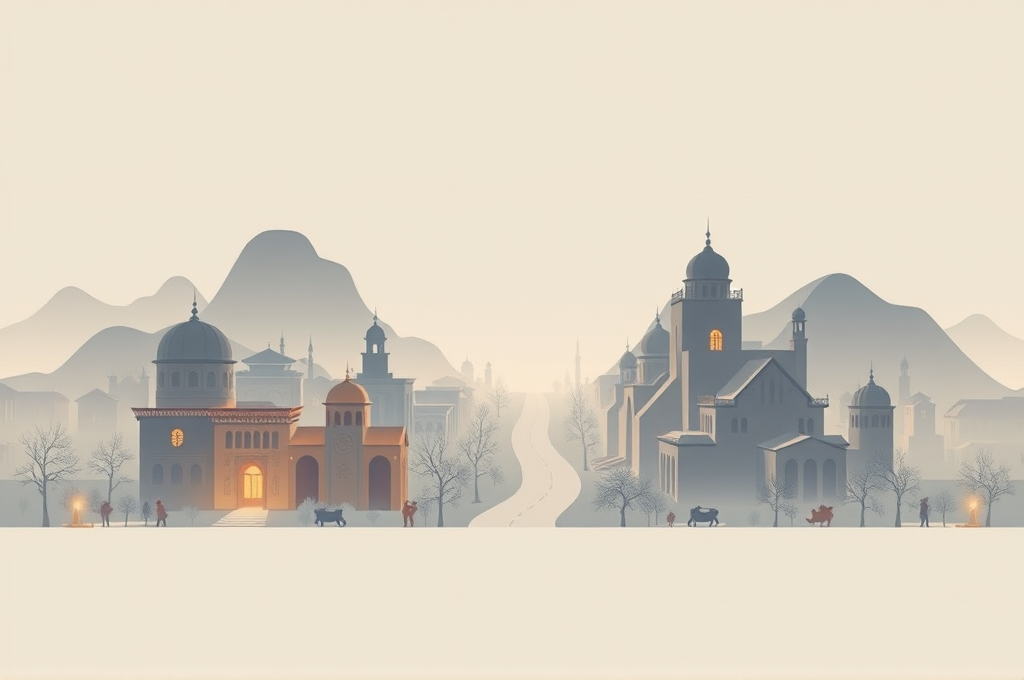
"What if" is the natural human response when confronting history. What if Oda Nobunaga had not died at Honnoji? What if the First World War had been avoided? What if Columbus had never reached the Americas?
Alternate History fiction takes these "what ifs" as a starting point and depicts the logically chained sequence of changes that would follow. Building a credible alternate history world requires three distinct operations: choosing the point of divergence, tracing the chain of changes, and maintaining consistency throughout.
Choosing Your Point of Divergence: Boulder or Pebble?
The Point of Divergence (POD) is the starting point — where your world parts ways from the real one. Two broad approaches exist.
The "Boulder" approach: Change the outcome of a major historical event. The winner of a war, the survival or death of a leader, the occurrence or non-occurrence of a natural disaster. The changes are large, and your world can diverge sharply from reality.
The "Pebble" approach: Change a small event that altered the course of history. A letter that was or wasn't delivered. An invention that spread a little earlier than it did. The surface change is small, but the divergence grows over time — the butterfly effect.
For beginners, starting with a "Boulder" is advisable. The change is legible; it's easier to explain to readers why the world is different. However, Boulders also mean a wider cascade of changes, which raises the difficulty of maintaining consistency.
The Butterfly Effect: Changes Are Chained
Once you've established your POD, the work of tracing "what does that change *change*?" begins. This is the core of alternate history world design — and its most enjoyable part.
Take "a world in which World War One was averted" as an example.
Without the First World War:
- The German Empire does not collapse; the Weimar Republic does not arise
- Hitler has no basis for political rise (his rise was built on defeat and social collapse)
- The Russian Revolution's triggering conditions change (the direct circumstances of the revolution shift)
- The Ottoman collapse changes, and the map of the Middle East looks very different
- The pace of technological innovation changes, especially in aviation, chemistry, and medicine
- The cultural and artistic movements of the 1920s (the Lost Generation) do not exist
A single POD changes everything — politics, economics, technology, culture — in a cascade. Chasing this cascade is the work of world design.
Aetheria's Great Fall is a textbook example of this "one event changes everything" type of alternate-history world design. Before and after the Great Fall, the world's physical laws, power structures, and inter-species relations all change.
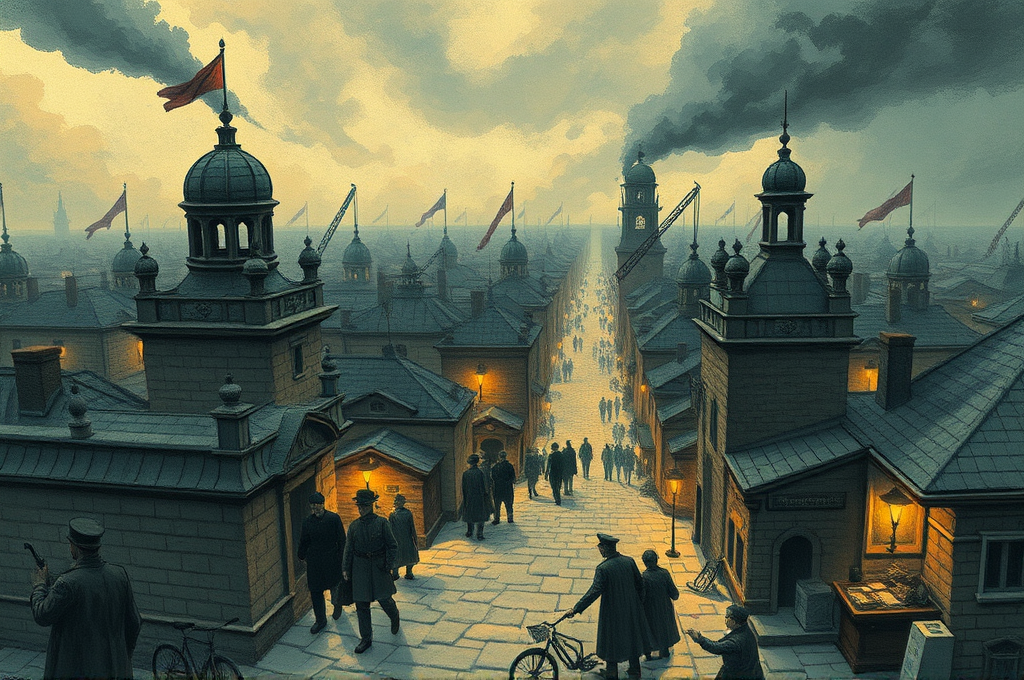
"The Flow of History" vs. "Human Choice"
Alternate history fiction contains a philosophical question: is history inevitable or contingent?
Historical determinism holds that even with surface-level changes, deep structural forces (the direction of technological development, accumulated social tensions, geopolitical pressures) converge on similar outcomes. "Even without Napoleon, someone would have played Napoleon's role in post-revolutionary France."
Contingency / individual decisionism holds that specific individuals' choices can drastically alter history. "Without Hitler, fascism would not have taken such a cruel form."
Which stance you take changes the "feel" of your alternate history world. A determinism-leaning world carries a heaviness where similar problems resurface even after change. A contingency-leaning world has the liberating feeling that individual choices produce dramatic differences. Both are valid — but choosing intentionally matters.
Maintaining Consistency: What Changes and What Doesn't
The central challenge of consistency in alternate history worlds is clearly defining "what changes and what does not."
Technology consistency: Technology invented before the POD survives, but subsequent innovation may change. Without World War One, the development timelines for radar, jet engines, and antibiotics shift significantly.
Geography and climate consistency: Whatever happens to human history, terrain and climate do not change. This means geopolitical basic pressures (Russia's perennial desire for ice-free ports, Britain's tendency toward maritime power) never fully disappear.
Human nature consistency: The drive for power, the need for security, and the pursuit of economic interest do not change in any version of history. Their expression changes; the underlying human nature continues to function in alternate worlds.
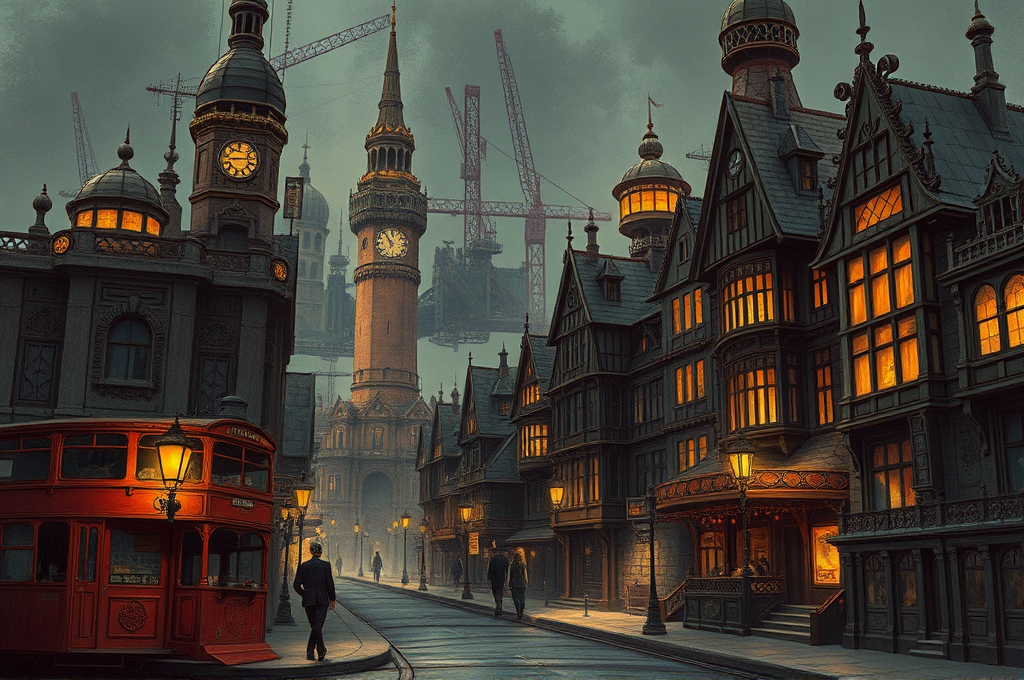
Practical Design Steps
A practical sequence for building an alternate history world:
First, write the POD in one sentence. "A world in which President Lincoln survives the assassination attempt of 1865."
Next, write five things that change immediately after the POD. Changes in Reconstruction policy with Lincoln still living, differences in the Republican Party's political trajectory, and so on.
Then, write the world fifty years and a hundred years out, on three axes — technology, politics, and culture. Change accumulates over time; the further out, the greater the divergence from reality.
Finally, deliberately design "things that are familiar but uncanny." A world that is completely different is simply foreign. A world that is *almost the same but decisively different* generates the uncanny (*unheimlich*) feeling that makes alternate history most powerful.
Building Alternate History Worlds with Worldseed
Designing an alternate history world is an intellectual game of following chains of change. Working through ideas in dialogue, rather than alone, produces fewer oversights and more depth.
Worldseed lets you build your world while dialoguing with AI from a "what if X had happened?" starting point — tracing change chains and confirming consistency as you go.
The Knowledge Track: When Technology Took a Different Road
The most commonly overlooked element in alternate history worlds is how the *accumulation of knowledge* changes. Technology doesn't spring from nowhere — it builds on prior accumulated knowledge. Change the flow of history, and the way knowledge accumulates changes, with some technologies developing faster and others more slowly.
Without World War One, military investment in aviation would be reduced and the development of civil aviation might slow. But chemical synthesis development (nitrogen fixation methods exist in this era) might have continued under different motivations. Which technologies to select is determined by thinking through the motivations and investment flows of people in the alternate history.
I recommend building a list of "what has been invented in this world, and what hasn't." The presence or absence of technologies directly determines everyday life, medicine, transportation, and warfare in that world.
Cultural Inertia: Knowing What Doesn't Change Easily
Even when history changes, culture has inertia. Political systems may change, but everyday values, religious practice, family norms, and food culture are slow to follow. This inertia is a crucial element giving alternate history worlds the sense of connection to reality.
Even in "a world in which the French Revolution did not occur," French people might still speak French, peasants might still be tied to the land, and the Catholic Church might still wield strong influence. Without the revolutionary political event, the deep structures — agricultural economy, feudal social relations, religious authority — might change in different forms, but would not change rapidly.
Consciously distinguishing between elements that should change and elements that should not is what gives an alternate history world its realistic weight.
Exploiting Reader Knowledge
The distinctive appeal of alternate history fiction rests on the premise that readers *know the real history*. Consciously using this reader knowledge creates effects unique to the genre.
"A person who should have died here is still alive" creates a distinctive tension for the reader through the asymmetry of information. Readers hold their breath: "when and how will this person's fate arrive?"
Conversely, "a tragedy that didn't happen in our reality occurs in this world" gives readers a fear that "perhaps this could have been our reality."
When writing an alternate history world, calculating "where does the reader's real-historical knowledge work to your advantage?" is an important technique for amplifying the story's emotional effect.
Worldseed's demo world The Long Tide tries exactly this: readers who know Malacca fell to Portugal in 1511 feel a different kind of tension watching The Strait Stand hold instead.
Build your alternate history world with Worldseed →
For a smaller pass, try the consequence ledger, which turns one divergence into an ordinary-day chain.
Carry it into your world
Turn one idea from this article into a living part of your world
Name the world, choose a genre, and use AI to connect your first element to the rest of the setting.
This week's seed: “Magic works only when spoken aloud in front of a witness. Who becomes valuable in this world — and who is silenced?”
Free includes 20 AI messages per 24 hours. No card required.
Keep shaping the idea
Three guides connected by topic, craft, or worldbuilding method.
When Messages Travel Faster Than Ships: An Alternate-History Consequence Ledger
A practical alternate-history exercise for tracing one changed technology into the organization that controls it, ordinary work and travel, and a scene a reader can witness. Includes a four-column consequence ledger.
Read guide →From Idea to Canon: One Place, Three Decisions
A practical worldbuilding loop for separating AI suggestions, your revisions, and the setting you actually keep. Use a night harbor example and a Keep/Change/Leave open worksheet to turn one idea into usable canon.
Read guide →Make a Magic Rule Through One Dispute
A practical worldbuilding exercise for making a magic rule matter: give two claimants a dispute, choose who judges it, define the price of proof, and decide one allowed exception. Includes a blank dispute card.
Read guide →